When Fred Landman started imagining the gardens he might create around his home in Greenwich, CT, it was as if he had entered a trance.
He and noted landscape architect Charles J. Stick looked toward the wooded ridge behind his newly renovated Georgian Revival house and terrace, thinking of possibilities, and he started to sense the potential of making more than just a nice backyard.
Landman remembered the feeling he had walking through the magnificent gardens of Les Quatre Vents, the Quebec estate of Garden Conservancy Founder Frank Cabot. Traveling through the lavish series of garden rooms, Landman was stunned, feeling transported into an entirely different world.
“This is what I love about gardens,” Landman remembers thinking. “They take you on a journey.”
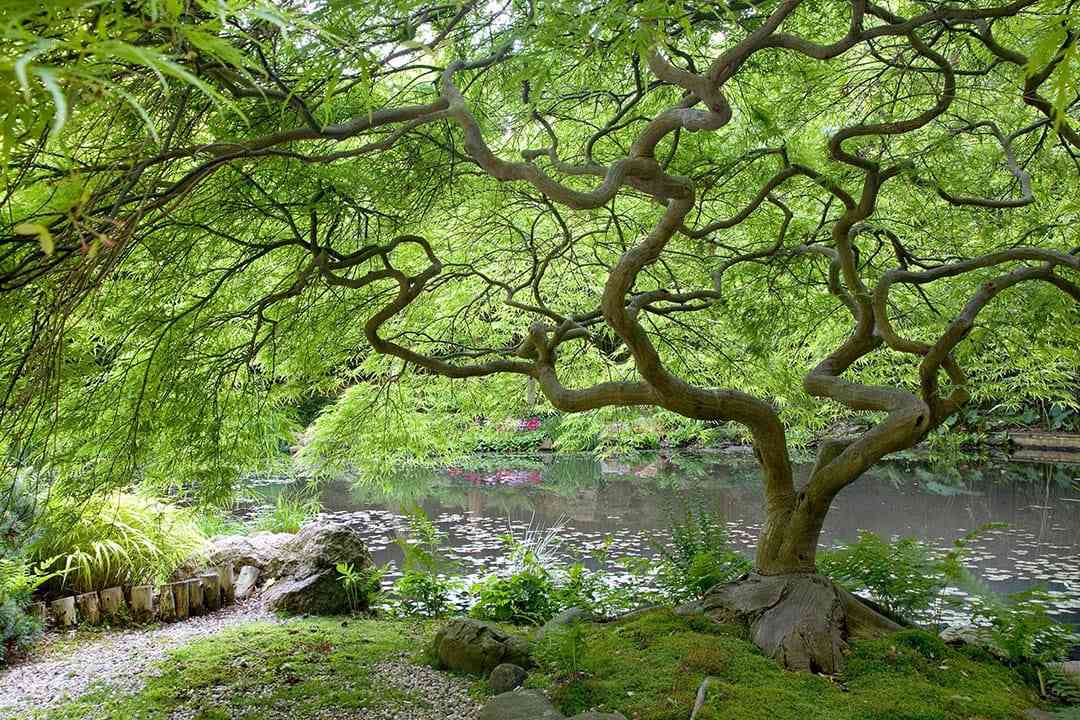
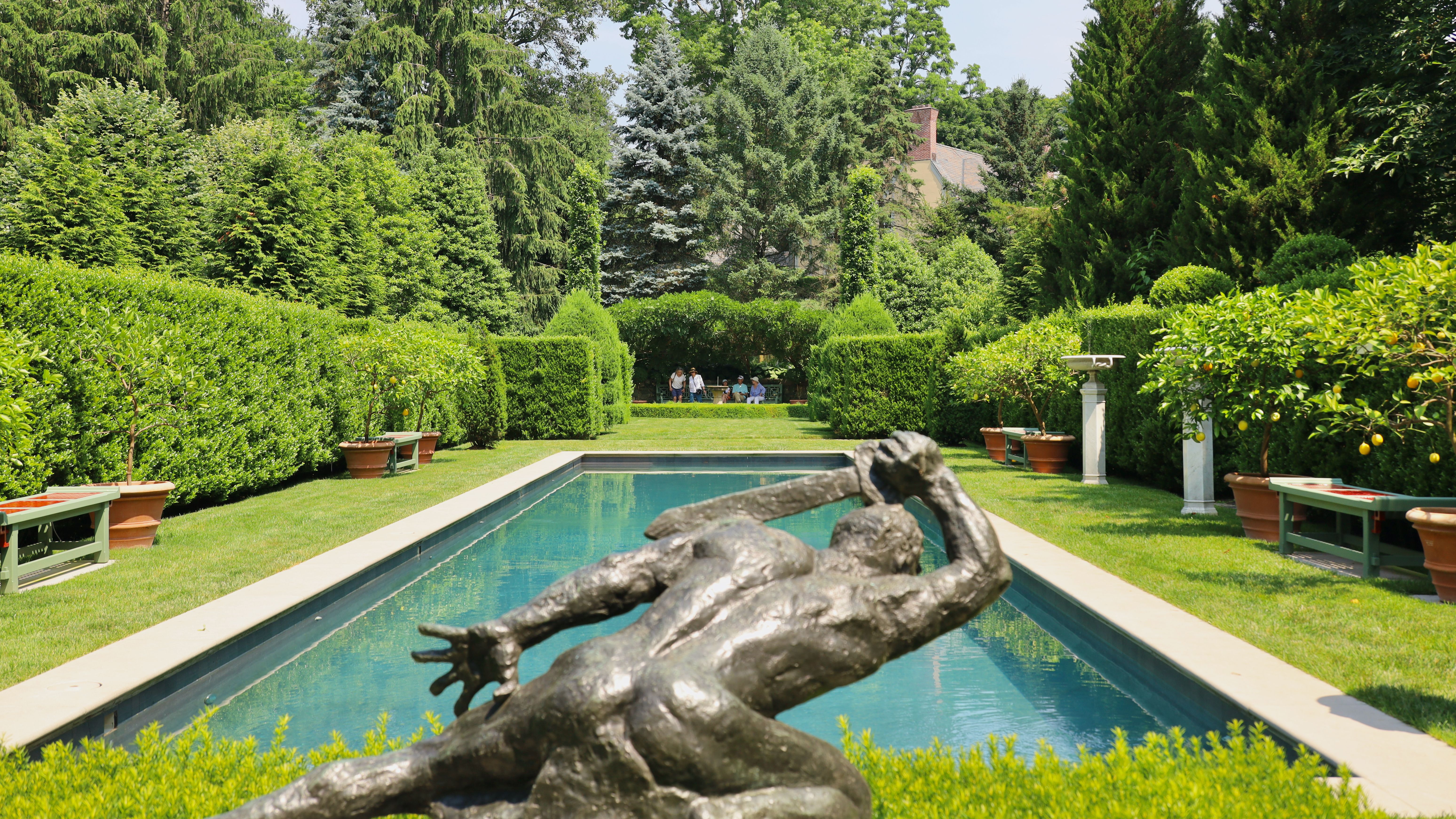
The experience inspired him to envision what he could do in Connecticut: “Let’s really do it right.” With Stick, Landman designed a journey modeled on Russell Page’s “Golden Path” at PepsiCo’s Donald M. Kendall Sculpture Gardens in Purchase, NY. They created a granite dust pathway that winds through an ever-changing woodland garden, offering a series of astonishingly beautiful discoveries along the way: native azaleas, fountains, statuary, a rustic stone grotto over a cascading stream, and a Japanese spirit bridge zigging and zagging through a field of irises.
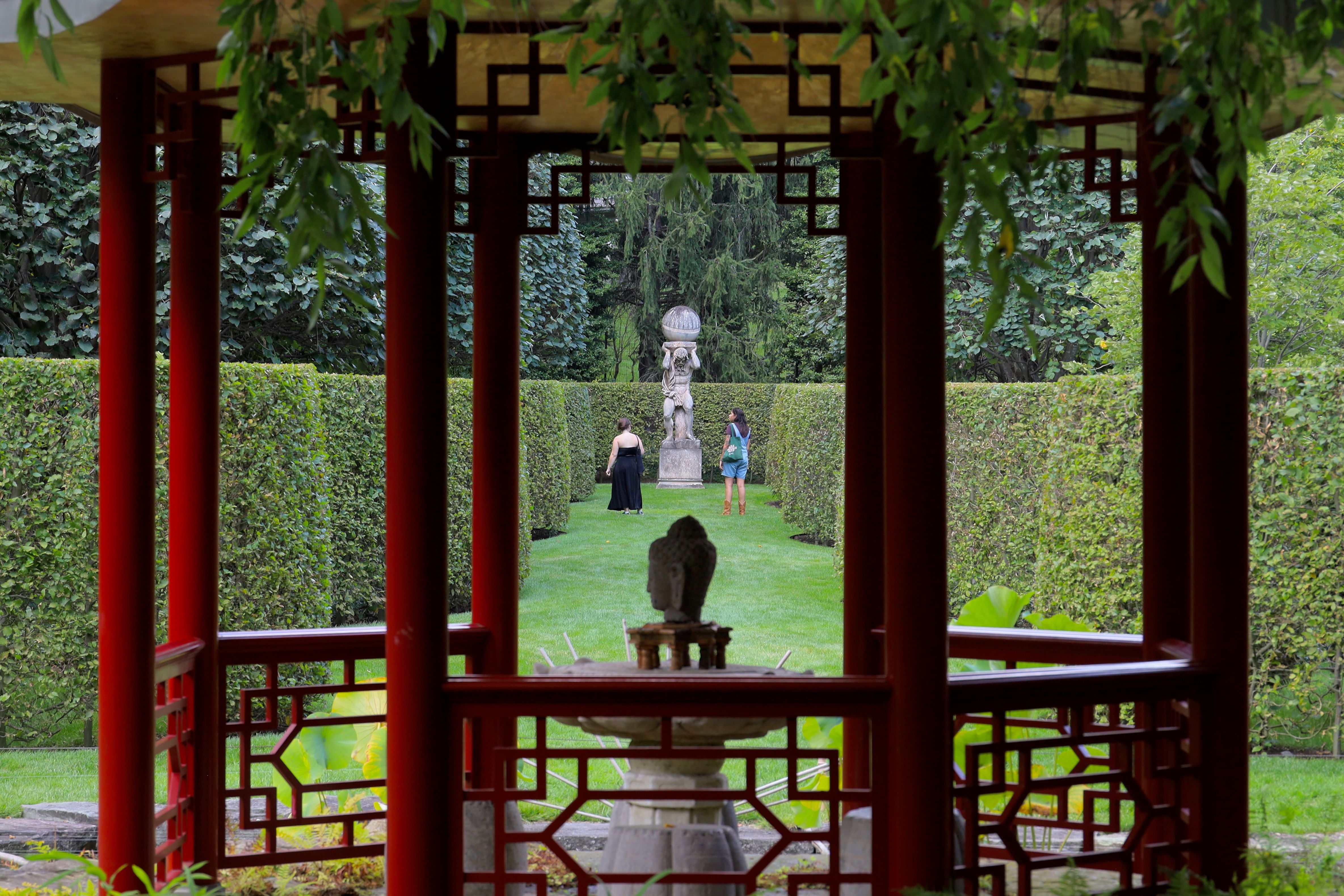
Once the six-acre property was fully developed, an opportunity came up to acquire a neighboring parcel. Six acres became eight, then ten, then thirteen, opening a whole new phase of artistic and horticultural endeavors each time. Landman sought out new ideas and works of art during travels with his wife, Seen Lippert. The garden journey expanded into greater heights of beauty with a Chinese pavilion and koi pond, wisteria arbor, limonaia, vegetable garden, berry wedge, orchard, and a magnificent undulating hedge leading to a sculpture of Atlas.
Once Landman was in his trance, he never came out. Sleepy Cat Farm is one of the marquee gardens in the Garden Conservancy Open Days program. As many as 900 people visit the property on a single day, several times a season, through Open Days. Through word of mouth, visitors learn about the garden and return to see it change throughout the seasons.
The first Open Days event was May 16, 2004, before it was known as Sleepy Cat Farm. The name honors the seventeen cats on the property, and “what they do eighteen hours a day,” Landman says.

One year, “someone was walking the garden, and they just kept walking. They end-ed up walking to an adjacent property—they thought they were still in the garden,” he says. “So then I said, ‘Maybe we need a map.’”
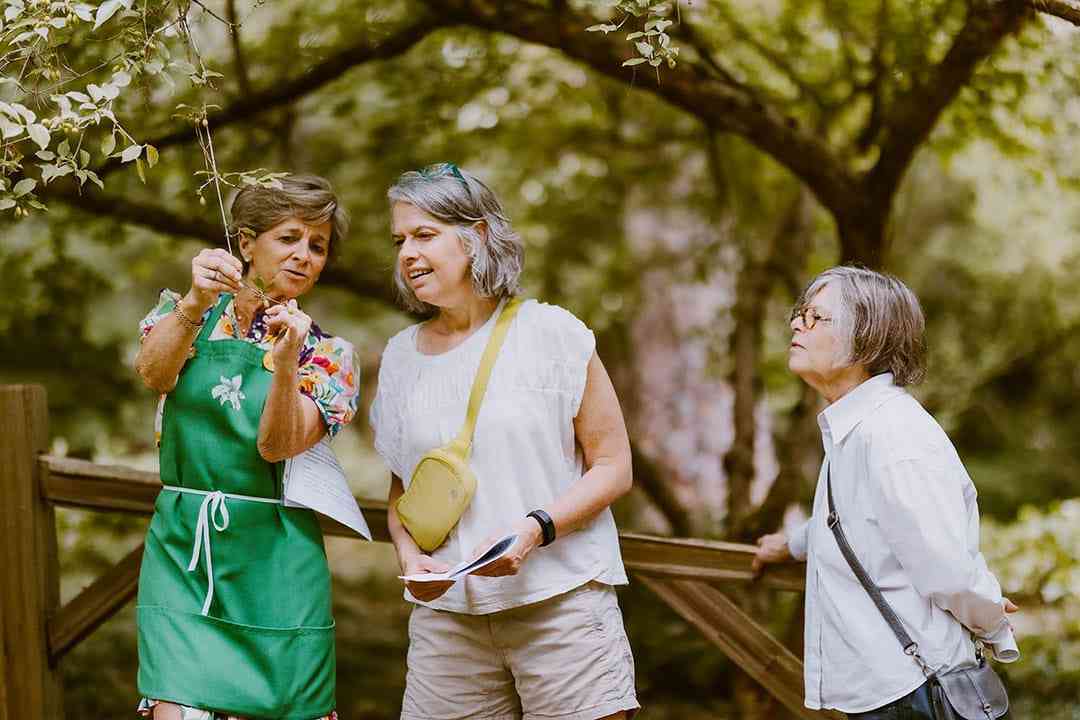
Sleepy Cat’s newest map includes a set of paw prints guiding visitors to all the major highlights. Staff and volunteers are stationed throughout the property, answering questions.
Landman mixes unobtrusively with visitors, happy to answer questions and witness their enjoyment of the garden.
When people thank him for opening the gar-den, he finds it puzzling: “I don’t understand why I wouldn’t open it.”
“I’ve put in the effort, time, money, and resources to make this experience something I love, and it’s great to find out everyone else loves it too,” he says. “It’s one of the nicer walks in the woods, I think. People come here to experience a garden, and yes, you’re looking at a bunch of flowers, but it becomes more about discovery and the journey you get to take.”
Landman’s vision is still expanding, not just across the property, but into the future. Plans are being made for all of the property to transfer to the Sleepy Cat Farm Foundation, with an advisory board that will keep the garden and its spirit alive—“a garden of whimsy, and fun.”
He recalls visiting a garden in Ireland that was 100 years old, yet still very much alive. “I’d like to think 100 years from now, people can come visit and have the same vibrant experience they had earlier this year,” he says.
“I think beautiful things are things to share.”
Reflecting on the career work he’s done over time, he describes having built things that emerged and then later disappeared. “I said, well, here’s something I’ve worked on for 28-some-odd years. It’s not a company.
It certainly doesn’t make money. But wouldn’t we like to have this garden going forward, and not disappear—like gardens do.”